
Missouri City, TX · Garage Door Service
Weather Seals and Drafts on Missouri City's 1980s-2010s Garage Doors
Most Missouri City garage doors date to the 1980s-2010s building boom. Here's what mild-with-freeze winters do to weather seals and drafts on that housing stock.
- Repairs & new doors
- Springs & openers
- Serving 4 nearby communities
Doing Nothing For Now
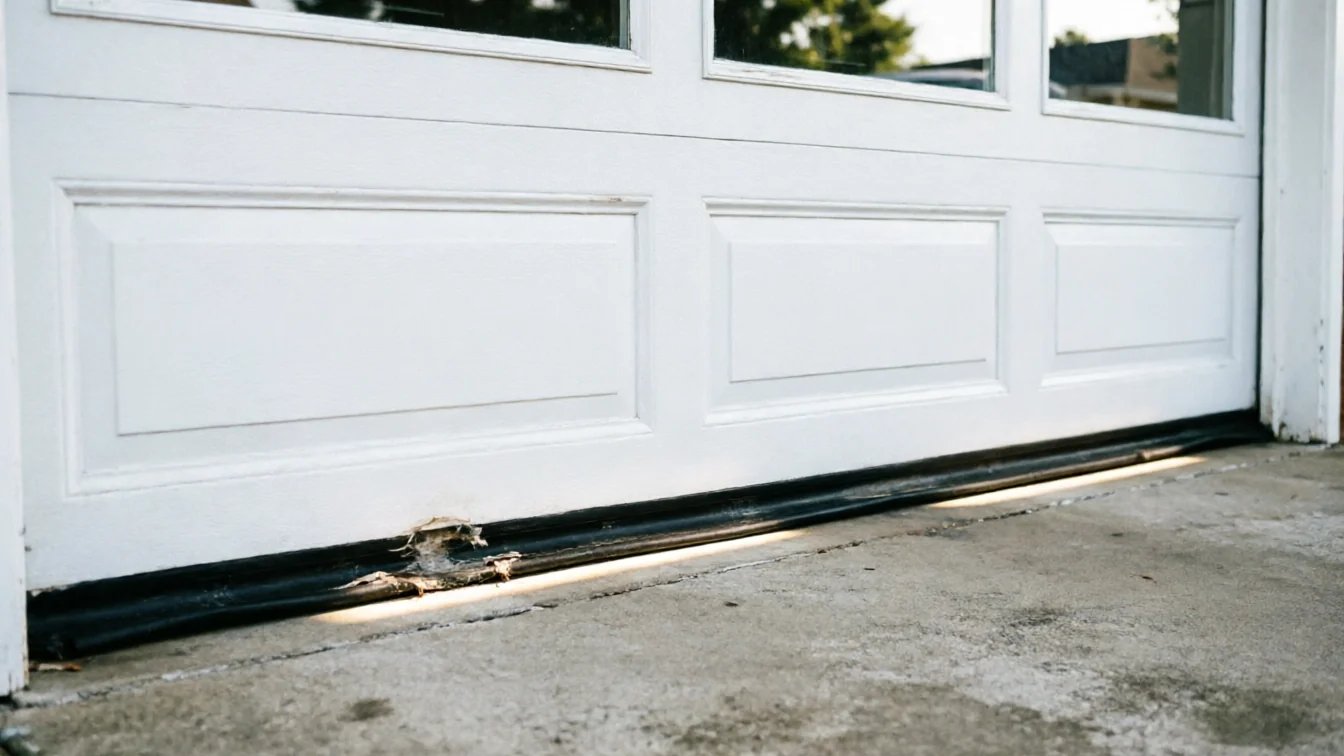
If your door still closes flush and you don't feel air moving around the bottom edge, you can leave it alone. A lot of homeowners in Missouri City hear about weather seal failure and assume they need a new door, but the vinyl astragal at the bottom is a $20-$40 part on most of the doors built here between 1976 and 2014, and it's a swap, not a replacement job. Waiting a season doesn't hurt the door itself. What it does is let small gaps get bigger, because a seal that's starting to crack in a mild-with-occasional-freeze climate like this one doesn't recover - it keeps splitting along the same line every time the temperature dips below freezing overnight and then warms back up by afternoon. That freeze-thaw cycling, even when it's brief and infrequent, is harder on rubber and vinyl than steady cold ever is. So doing nothing for now is fine if you're watching for the signs. Doing nothing indefinitely means you'll eventually be dealing with a seal that's shrunk, cracked in three or four places, and letting in more than just drafts - leaves, water, and the occasional field mouse looking for somewhere dry.
How Local Conditions Play In
Missouri City sits in a mild climate band with some freeze risk, which sounds like good news for a garage door and mostly is - you're not fighting the kind of sustained deep-freeze that cracks steel panels further north. But the stock of houses across this service area, built mostly in the 1980s and 90s with construction continuing out to 2014, means a lot of doors are old enough that their original factory seals have already gone through twenty-plus years of expansion and contraction. The seal material doesn't care that the freezes here are occasional rather than constant. Each cycle - cold snap, then a 60-degree afternoon - works the same way on vinyl regardless of how many times a year it happens. What's different here versus a harsher climate is pace: Missouri City doors tend to fail at the seal and the weatherstripping on the panel edges before anything structural goes wrong. You're less likely to see a warped steel skin from freeze pressure and more likely to see a bottom seal that's gone flat, brittle, or pulled loose from its retainer track.
The Problem
Drafts around a garage door usually show up at three spots: the bottom astragal seal, the vertical seals along both sides of the jamb, and the gap where two panels meet on an older sectional door. On houses built in the 1990s - the median build year for this area - those side seals are often the original foam-backed strip, stapled or nailed into a wood jamb rather than a vinyl retainer. That staple-and-foam setup was common in that era and it doesn't hold up as well as the channel-style seals used on newer installs. When it fails, you get a draft you can feel with your hand held a few inches from the frame, usually worse on the side that catches the afternoon sun, because that's the side that heats and cools the most. The honest limitation here: if the jamb itself has shifted or rotted at the base, swapping the seal won't fix the draft - you're looking at a jamb repair first, and that's a different job with different parts.
What to Check
Start at the bottom seal. Close the door and look for daylight along the floor - if you can see a sliver of light under more than one section, the astragal has shrunk or cracked. Next, run your hand along both vertical jambs with the door closed; cold or moving air there usually means the side seal has pulled away from its track, which is common on houses old enough to have the original foam strip. Check the spot where panels meet, especially on doors that predate 2000 - gaskets between panels compress over the years and stop closing the gap. Last, look at the bottom corners where the vertical and horizontal seals meet; this is where water and air both find a way in first, and it's the spot most owners skip because it's low and easy to miss. None of this requires tools beyond a flashlight. If you find gaps at more than two of these points, that's a seal replacement job, not a patch.
Frequently asked questions
Why does my garage door let in a draft only in winter?
Vinyl and foam seals contract in cold weather, and Missouri City gets enough freeze nights to shrink the material over a season or two, even without sustained hard freezes. The gap opens in cold weather and often closes back up partially once temperatures warm, which is why it feels seasonal rather than constant.
Is it worth replacing seals on an older door or should I replace the whole door?
If the panels and track are still square and the door opens smoothly, a seal swap is the cheaper fix and usually solves the draft. Full replacement makes more sense if the door itself is from the earlier end of the 1976-2014 build range and showing rust, warping, or track wear beyond the seals.
How often should I check my garage door seals?
Once a year is reasonable for this climate - check before the first cold snap of the season. Because freezes here are occasional rather than constant, seal wear tends to be gradual, so an annual check catches it before you're dealing with a fully failed astragal.
Related garage door services in Missouri City
More garage door guides
Book garage door service in Missouri City
Call now or request a quote - tell us what the door is doing and where you are.