
Missouri City, TX · Garage Door Service
What an Older Door Is Worth Fixing in Missouri City
Most Missouri City homes date 1976-2014. Here's how to tell if your original door and hardware are worth repairing or ready to replace.
- Repairs & new doors
- Springs & openers
- Serving 4 nearby communities
Doing Nothing For Now
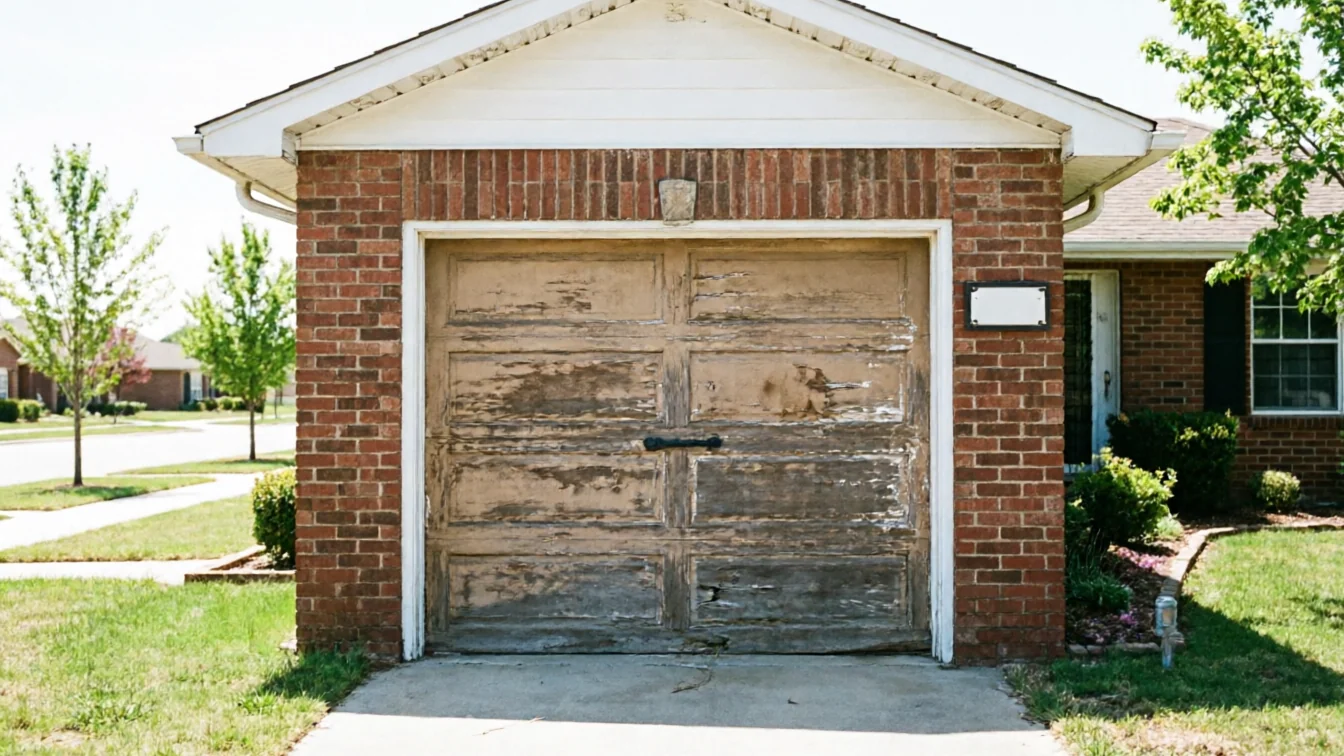
If your door still opens and closes without a fight, you don't need to do anything today. A lot of the houses in this area went up between 1976 and 2014, with the median build year sitting around 1995 - so plenty of doors out there are pushing 25 to 30 years old and still working fine. Age alone isn't a reason to replace a door. What matters is whether the panels are still square, the springs are cycling smoothly, and the opener isn't straining. If the door is quiet, balanced, and closes flush to the slab, waiting costs you nothing. The mistake is waiting after something changes - a new grinding sound, a door that drifts off track, a remote that stopped working reliably. That's when "wait and see" turns into a Saturday morning no-go. For a door built in that late-70s-to-mid-90s window, most of what fails first is hardware, not the door panel itself, and hardware is usually the cheap half of the job.
How Local Conditions Play In
Missouri City sits in a mild climate with occasional freeze, which is gentler on steel and hardware than a true freeze-thaw region, but it's not nothing. A door built in the 1980s or 90s wasn't engineered with today's weatherstripping or insulation standards, and over two or three decades the bottom seal and the side seals break down from UV and heat cycling even without hard winters. On an occasional freeze morning, a worn seal lets in enough cold air to stiffen old grease in the rollers and hinges, which is often what causes the "groaning door" calls we get after a cold snap. It's rarely damage - it's lubricant that should've been replaced years ago. Because the freeze risk here is occasional rather than constant, we don't see the track warping or spring snapping that colder regions get every winter. The bigger local factor is just time: a door built in that mid-90s median year has had two and a half decades of Gulf Coast heat and humidity working on its springs, cables, and rollers, and that wear is steady and predictable rather than storm-driven.
The Problem
The actual failure point on a door from the 1976-2014 build range is almost always the torsion spring, the rollers, or the opener gears - not the door panel. Steel panels from that era were built heavier than a lot of today's entry-level doors, and they hold up fine cosmetically for decades. What doesn't hold up is anything that cycles: springs are rated for a set number of open-close cycles and wear out regardless of weather, rollers wear grooves into their bearings, and older chain-drive openers lose gear teeth after enough years of use. So the real question with an older door isn't "is the door too old" - it's "which part failed, and is the rest of the door still sound." A door with good panels and a dead spring is an easy, worthwhile repair. A door with warped panels, a bent track, and a dead spring all at once is a different conversation, and that's usually where replacement starts to make more sense than chasing three separate repairs.
What to Check
Before you decide to repair or replace, walk out and look at four things. First, the panels - are they straight, or do you see dents, rust-through, or daylight gaps when the door is closed. Second, the springs - a door that feels heavy to lift by hand, or that slams down instead of lowering evenly, has a spring problem, not a panel problem. Third, the rollers and track - listen for grinding, and look for a track that's pulled away from the wall. Fourth, the opener - grinding gears, a motor that runs but doesn't move the door, or a unit that's clearly original to a mid-90s build is worth comparing against the cost of the door itself. If panels are straight and the track is sound, repairing springs, rollers, or an opener is almost always worth it on a door from this era. We won't tell you to replace a door that just needs a spring - that's a half-day job, not a new-door job. Replacement earns its keep only when the panels or frame are the problem, not the moving parts.
Frequently asked questions
Is it worth fixing a garage door from the 1990s in Missouri City?
Usually, yes. Most of our area's housing was built between 1976 and 2014, with a lot of doors from that era still having sound steel panels. If the panels are straight and the track is undamaged, replacing a spring, roller set, or opener is almost always cheaper than a new door and solves the actual problem.
Does the occasional freeze here damage garage doors?
Not the way hard winters do elsewhere. Missouri City's climate is mild with only occasional freeze, so we don't see springs snapping or tracks warping from cold the way colder regions do. What we do see after a cold morning is stiff, old grease in rollers and hinges from a worn weatherstrip letting in cold air.
How do I know if my door needs a new spring or a whole new door?
Check the panels first. If they're straight with no rust-through or warping, a heavy-feeling or unevenly closing door almost always points to a spring, not the door itself. Spring replacement is a contained repair. Replacement only makes sense once the panels or frame are damaged alongside the spring.
Related garage door services in Missouri City
More garage door guides
Book garage door service in Missouri City
Call now or request a quote - tell us what the door is doing and where you are.