
Missouri City, TX · Garage Door Service
Garage Door Service for Stafford Homes
Garage door repair and spring service for Stafford, TX homes built around 1992, serving the area from Missouri City, 5 miles away. Call for hardware matched to your door's age.
- Repairs & new doors
- Springs & openers
- Serving 4 nearby communities
What We Do Most in This Area
Stafford sits about 5 miles from our Missouri City base, and most of what we run out here falls into two buckets: spring replacement and opener trouble on doors that are now over thirty years old. The typical house in this part of the service area went up around 1992, which puts it right in the middle of the broader 1976-2014 build window we see across the whole area, but on the earlier side of it. That matters because a door installed in the early '90s is likely on its second or third spring set by now, and the opener - if it's original - is a chain-drive unit with a logic board that's long past its expected service life. We also get a steady run of track and roller calls, since steel rollers from that era wear grooves into galvanized track faster than the nylon rollers used in newer builds. Replacement glass-panel doors with lighter composite skins are less common here than in the newer subdivisions closer to Cinco Ranch - most of what we touch in Stafford is heavier, older steel.
The Houses Here
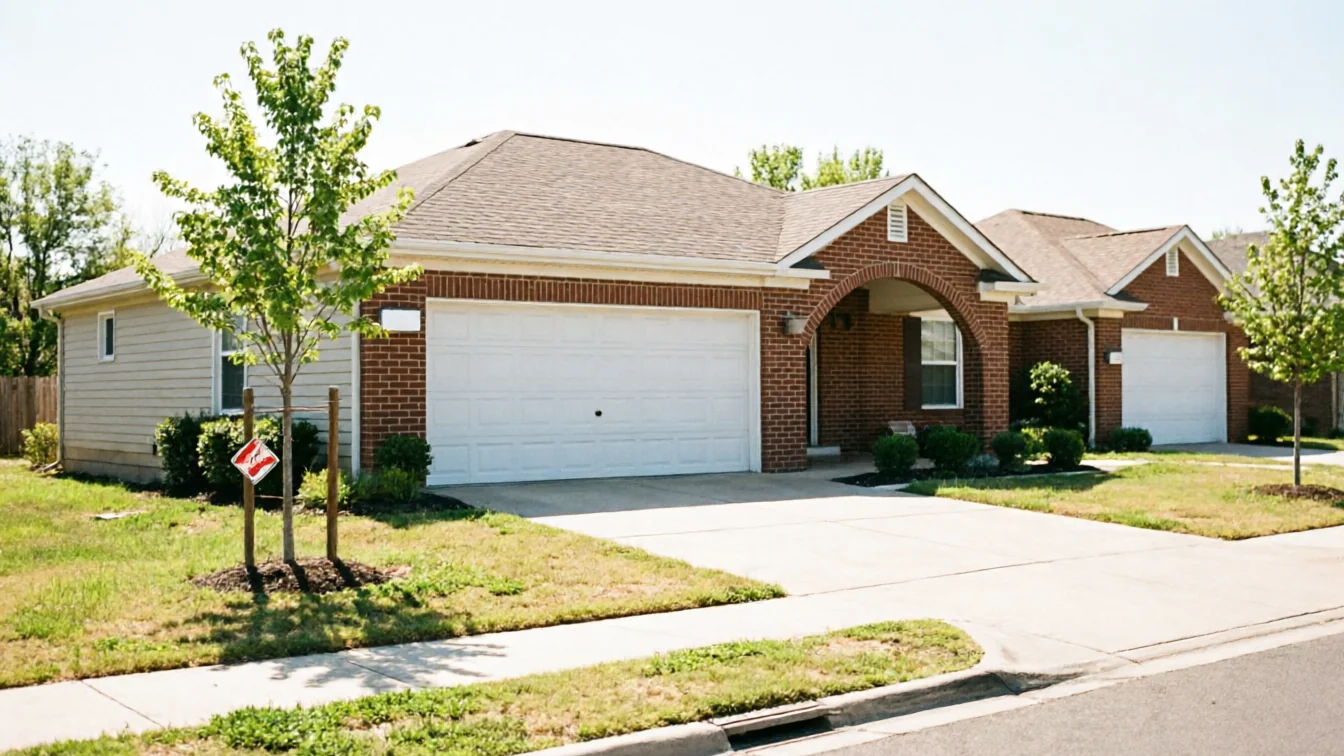
With roughly 6,515 households in this part of the service area, Stafford is a smaller, tighter pocket than some of the surrounding communities, and the housing stock reflects a single development push rather than decades of infill. A median income of $85,910 here runs below the $126,167 median for the wider service area, which shows up in what homeowners choose when a door fails: more repairs, fewer full replacements, and more requests to keep an original frame and just swap the hardware. Garage doors from the early '90s in this area are almost always 16-foot double doors on steel track with a center support bearing - a setup that's reliable but heavier on the springs than the two-spring systems used on newer insulated doors. We don't see much of the thin-skin aluminum doors that showed up later in the build cycle; this area mostly missed that trend entirely.
The Calls We Get From Here
The call we get most from Stafford addresses is a door that won't open, with the owner reporting it worked fine the day before. Nine times out of ten that's a broken torsion spring giving out under a door built heavy enough that it can't be lifted by hand once the spring goes. Close behind that is opener failure - not the motor, usually, but the drive gear or the logic board on a unit that's outlived its parts support. We also get cable calls on these older doors, since the cable drums on 1990s hardware are narrower than current drums and wear through cable strands faster. One thing we're upfront about: if the opener is original to a 1992 build, we're not going to spend an hour chasing a board fault on something that old. Past a certain point a new opener costs less than the labor to diagnose the dead one, and we'll tell you that on the phone before we load the truck.
How That Shows Up in the Door
A door built around the early '90s in Stafford behaves differently under stress than a 2010s insulated door, and it's worth knowing the difference before a spring breaks on you. These doors are typically uninsulated or single-layer steel, heavier per square foot than current doors, which means the torsion springs doing the lifting are wound tighter and fail harder - expect a loud bang, not a slow sag. The track is usually galvanized steel on a horizontal rail with a jamb bracket design that newer vertical-lift systems don't use, so hardware swaps need parts sized to the older spec, not whatever's on the shelf for current models. Rollers on these doors were steel from the factory in most cases, and if nobody's swapped them, they're the loudest part of the door by now. None of this is unique to Stafford's climate - the MILD band with occasional freeze risk here doesn't stress the hardware the way it ages the springs and cables on their own.
Frequently asked questions
Do you have a shop in Stafford?
No. We run out of Missouri City, about 5 miles away, and come to Stafford for calls. There's no local depot here, just a truck that covers this address along with the rest of the service area.
Why does my 1990s door need a different spring than my neighbor's newer one?
Older doors built around 1992 in this area are usually heavier steel without the lighter composite or insulated panels used later. That weight means the torsion spring has to be wound to a different spec. Using a generic spring sized for a lighter modern door won't lift it safely.
Is it worth fixing an opener that old or should I replace it?
If the opener is original to a house built in the early '90s, we usually recommend replacement over repair. Parts support for that generation is thin, and diagnostic labor on a dead board often costs more than a new unit installed.
Why do my rollers sound so loud compared to newer doors nearby?
Doors from this build era mostly came with steel rollers, not the nylon rollers common on newer installs. Steel rollers wear grooves into the track over time and get noisier as they age, especially if they've never been swapped.
Garage door services in Stafford
Every service our crew runs in Stafford, TX.
Book garage door service in Missouri City
Call now or request a quote - tell us what the door is doing and where you are.